
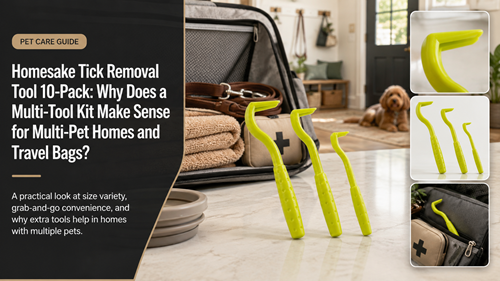
Homesake Tick Removal Tool 10-Pack is appealing less because one household needs ten tools at once and more because tick removal is time-sensitive enough that having the right tool in several predictable places can be useful. Multi-pet homes, cars, hiking bags, grooming stations, and travel kits are common places where a dedicated remover can prevent a last-minute search.
The number of tools does not make removal safer by itself. Owners still need good lighting, calm restraint, a method appropriate to the tool, post-removal cleaning, and a plan for contacting a veterinarian if the tick cannot be removed cleanly or the bite area becomes concerning.
A multi-pack is therefore best treated as an organization system. Assign each tool a location, keep it clean, make sure everyone who handles the pets knows where it is, and combine it with routine tick checks after time outdoors.
When a Homesake Tick Removal Tool 10-Pack Is More Useful Than One Tool
The strongest case for a ten-pack is access. A tick found after a trail walk, at a vacation rental, or on a second pet should not require borrowing a rusty household tweezer or driving home for a specialized remover. Distributed tools also reduce the temptation to use petroleum jelly, heat, nail polish, or other improvised methods.
The weaker case is buying many tools without a routine. Tick checks are still needed daily in risk areas, and the remover must stay clean, intact, and easy to locate. A small card with the preferred removal steps and veterinarian phone number can make each kit more useful.
Where to Store Tick Tools and How to Use Them
Distribute the Pack by Real Use
The multi pack tick remover tools product page is the starting point for confirming the tool style and quantity before assigning pieces around the home.
Keep the tools in labeled small bags or containers so they are not mistaken for toys or grooming accessories and can be cleaned after use.
Give Multi-Pet Households More Than One Station
A tick tool kit for pet households is easier to use when tools are kept near the places where different animals are normally checked.
If dogs have different coat types, add a fine comb, bright flashlight, disposable gloves, and a sealable container for removed ticks to the station.
Put a Dedicated Tool in the Travel Bag
For portable tick removal for travel, a small dedicated kit is preferable to relying on whatever happens to be in a hotel or campsite first-aid box.
Check the kit before each trip. Replace bent or damaged tools and keep hand cleaner, a small light, and emergency veterinary contact information nearby.
Chemical-Free Removal Still Requires Technique
A chemical free tick removal device avoids applying a pesticide during removal, but the mechanical technique still matters.
CDC guidance for attached ticks emphasizes prompt removal with steady, controlled traction and warns against petroleum jelly, heat, or nail polish. For pets, follow the remover instructions and veterinary guidance.
Spare Tools Are Useful Only When They Are Findable
Keeping spare tick tools for dog bags in walking, car, and travel kits can reduce delays when a tick is noticed away from home.
Do not leave loose tools where a dog can chew them. Store each one in a small closed pouch and return it to the same place after cleaning.
Make the Tool Part of Pet First Aid
A pet first aid tick extractor belongs with first-aid supplies only if the owner also knows when removal should be handed to a veterinarian.
Ticks attached near the eye, inside the ear, or on a dog that is painful or difficult to restrain can be safer to manage professionally.
Where a 10-Pack Can Be Distributed
Assign tools to places where tick checks actually happen rather than storing all pieces in one drawer.
| Location | Useful Add-Ons | Maintenance |
|---|---|---|
| Home grooming station | Light, gloves, comb | Clean tool and return after use |
| Dog walking bag | Small light, waste bags | Check pouch weekly |
| Car kit | Gloves, sanitizer, sealed container | Avoid extreme heat and clutter |
| Camping or hiking kit | First-aid supplies, emergency contacts | Inspect before every trip |
| Second pet area | Comb suited to coat type | Keep tool clearly labeled |
Build Tick Checking into the End of Every Outdoor Day
Check the dog before entering the main living area after hiking through grass, brush, leaf litter, or wooded habitat. Move systematically from head to tail and feel through thick coat with fingertips as well as looking.
If a tick is attached, keep the dog calm and use the tool according to its instructions. After removal, clean the bite area and hands as appropriate, record the date and location, and monitor the dog for changes in behavior or appetite.
Tick-Removal Kit Checklist
- Dedicated remover or fine-tipped tweezers
- Bright flashlight or headlamp
- Disposable gloves
- Small comb
- Sealable tick container
- Hand-cleaning supplies
- Pet first-aid notes
- Veterinarian phone number
- Spare tool in the travel bag
A ten-pack is successful when owners can reach a clean tool in seconds and use it correctly, not when ten unused removers sit together in their retail package.
Know When Tick Removal Needs Veterinary Help
Contact a veterinarian if the tick is in a sensitive location, the dog cannot be safely restrained, significant parts remain and the site is irritated, or the bite area develops swelling, discharge, pain, or other concerning changes.
After known tick exposure, monitor the dog for changes in appetite, energy, gait, or behavior. Tickborne illness signs can appear later, so tell the veterinarian about the exposure history.
CDC guidance on preventing ticks on pets recommends daily tick checks for pets that spend time outdoors and prompt removal of attached ticks.
Use Homesake Tick Removal Tool 10-Pack as an Access Plan
Homesake Tick Removal Tool 10-Pack is most practical for households that want the right tool at home, in the car, and in travel gear without constantly moving one remover between locations.
Pair the multi-pack with daily checks, clean storage, correct removal technique, and veterinary follow-up when a bite or the dog’s condition is concerning.
Frequently Asked Questions
Why buy ten tick removers instead of one?
Multiple tools can be kept in grooming, walking, car, and travel kits so one is available when a tick is found.
Can I use oil or petroleum jelly to make a tick release?
Avoid improvised methods. Use an appropriate mechanical removal method and follow veterinary guidance.
Should I save the removed tick?
A sealed container can be useful for identification discussions, but follow local or veterinary guidance about whether keeping it is necessary.
What if the tick breaks during removal?
Do not dig aggressively into the dog’s skin. Contact a veterinarian if material remains and the area is irritated or difficult to manage.
How often should outdoor dogs be checked?
CDC recommends checking pets daily for ticks, especially after they spend time outdoors.
