

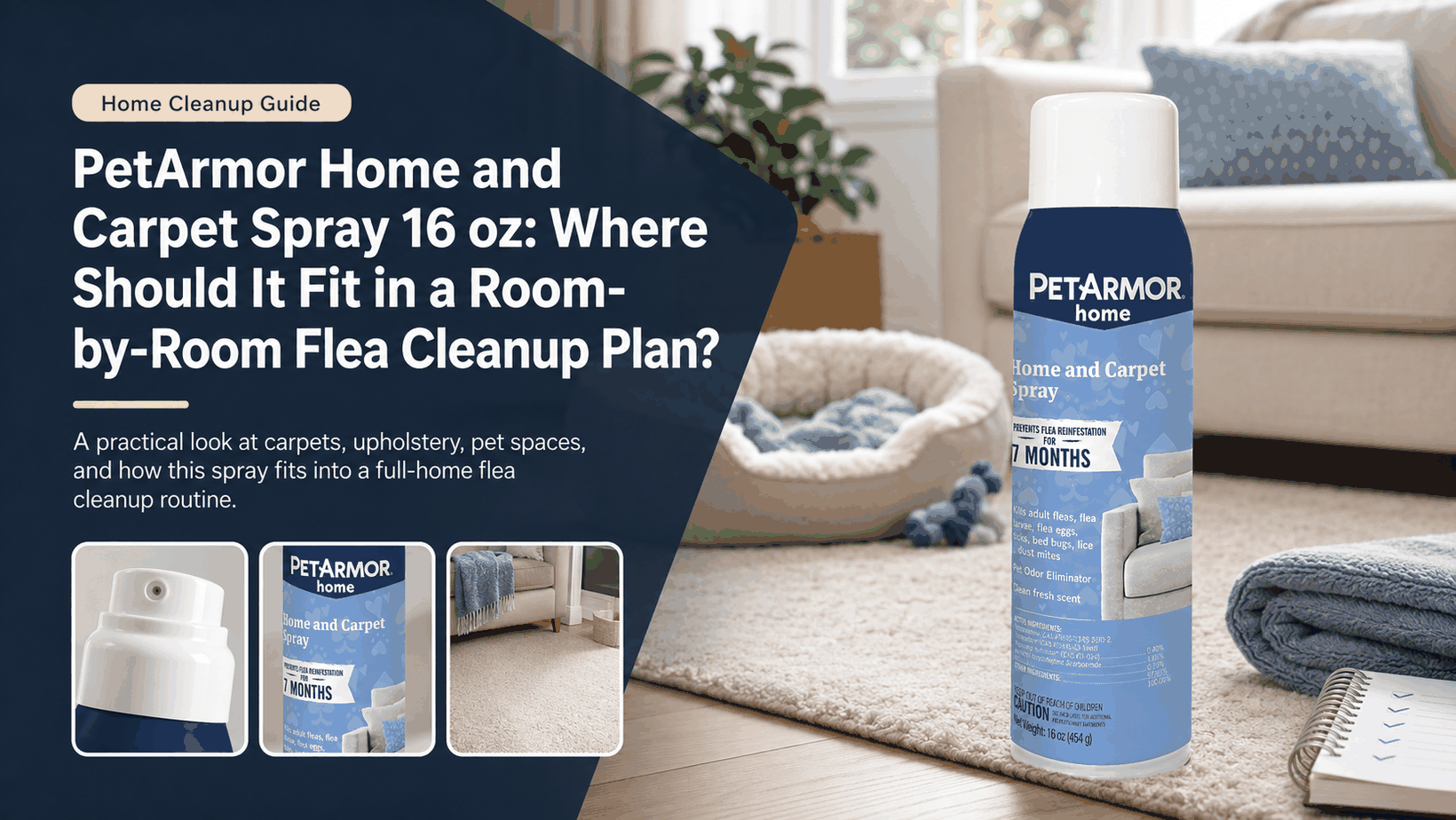
PetArmor Home and Carpet Spray 16 oz belongs in the environmental side of flea control, not on the dog. A room-by-room plan helps owners identify where pets sleep, where upholstered surfaces collect debris, which carpets receive the most traffic, and how treated spaces can be kept clear until they are dry.
The current PetArmor product directions specifically say not to apply the home-and-carpet spray directly to pets and instruct users to vacuum before treatment. That distinction matters because household pesticide sprays and pet-applied flea products have different labels, exposure routes, and safety steps.
Good room sequencing also prevents owners from treating the entire home at once and then having nowhere safe for pets and people to stay. Work in manageable zones, follow surface-testing directions, and coordinate treatment with washing suitable bedding and the dog’s own veterinarian-approved prevention.
Where PetArmor Home and Carpet Spray 16 oz Fits in Flea Cleanup
Household flea control works best when owners map the dog’s real resting and traffic areas rather than spraying every visible floor. Focus inspection on bedding, rugs, carpet edges, furniture, cracks, and rooms where pets spend the most time, then use only the surfaces and application pattern allowed by the label.
Environmental treatment does not replace treatment of pets. If multiple dogs or cats live in the home, each animal needs an appropriate species- and weight-specific prevention plan from the relevant label and veterinarian. The home spray addresses a different part of the flea life cycle.
Room-by-Room Treatment and Cleanup Decisions
Start with the Carpeted Rooms Pets Use Most
The home flea spray for carpeted rooms product page should be matched to the exact 16-ounce container and current directions before a treatment zone is planned.
Measure the room and identify which surfaces are actually labeled for treatment. More spray is not automatically better and can increase drying time or residue.
Prioritize Pet Resting Areas
A flea treatment for pet resting areas plan should include bedding, the floor around beds, favorite rugs, and upholstery the pet uses rather than focusing only on open carpet.
Wash washable bedding at an appropriate setting and follow label instructions before treating mattresses, furniture, or other surfaces. Never assume every fabric can be sprayed.
Keep Household Tick Products in Their Lane
Good household tick spray planning begins by separating indoor surface products from products meant for a dog’s skin or coat.
Read the label for target pests and locations. A product that kills ticks on household surfaces may still be unsafe for direct pet application.
Do Not Let Odor Control Drive Pesticide Use
For pet odor and flea cleanup, remove the source of odor and clean pet areas routinely instead of treating a room simply because it smells like pets.
Pesticide use should be tied to the labeled pest problem. Normal vacuuming, laundering, ventilation, and non-pesticide cleaning still have separate roles.
Sequence Vacuuming Before Treatment
A carpet pest treatment sequence should begin with careful vacuuming of carpets, baseboards, furniture edges, and other labeled areas before the spray is applied.
Seal and dispose of vacuum debris appropriately so captured flea stages are not left in the living area. Then follow the spray label for application and drying.
Treat One Zone at a Time
PetArmor’s official directions make room by room flea control easier by explaining pre-vacuuming, treated-room access, and drying expectations.
Plan a clean untreated room for pets while another room is drying. Only return them when the label conditions are satisfied and the surface is fully dry.
Room Sequence for Environmental Flea Cleanup
A simple map prevents over-application and makes it easier to keep pets away from wet treated surfaces.
| Zone | Before Treatment | After Treatment |
|---|---|---|
| Primary pet sleeping room | Vacuum; remove washable bedding | Keep room closed until surfaces are dry |
| Living-room carpet | Vacuum edges and upholstery | Check surface dryness before re-entry |
| Hallways and traffic paths | Remove toys and food items | Restore items only after label conditions are met |
| Bedrooms used by pets | Strip washable linens if appropriate | Do not spray linens unless label allows it |
| Untreated safe room | Keep clean and accessible | Use as temporary pet area during drying |
Coordinate the Home Spray with the Pet Treatment Calendar
Before environmental treatment, write down every flea-and-tick product currently used on each pet. This prevents a household spray from being mistaken for a pet treatment and helps the veterinarian review the full control plan if fleas persist.
Vacuum, treat, dry, and reopen rooms in sequence. Continue routine vacuuming and laundering as appropriate afterward. Flea development stages can persist in the environment, so judge the plan over time rather than expecting one visible spray session to end every future emergence.
Before Spraying a Room
- Read the entire current label
- Remove pets and children from the treatment area
- Remove or protect food and feeding items
- Vacuum carpets and upholstered areas
- Test an inconspicuous surface if directed
- Shake and apply only as labeled
- Keep treated rooms clear while wet
- Verify surfaces are fully dry
- Wash hands after application
Store the container in its original package away from children, pets, food, and heat. Follow the label for disposal instead of pouring leftover product into a drain.
Home Flea Spray Is Not a Pet Spray
Never apply PetArmor Home and Carpet Spray directly to a dog or cat. If a pet contacts wet product or has a concerning exposure, follow the label’s first-aid instructions and contact a veterinarian or appropriate poison resource.
Household pesticide labels are legally important instructions. Use the product only on listed surfaces, at the listed rate, and for the pests and locations on the label.
PetArmor’s official Home and Carpet Spray instructions state that the product is for indoor household use, should not be applied directly to pets, and should be used after thorough vacuuming with treated rooms avoided until dry.
Use PetArmor Home and Carpet Spray 16 oz as One Environmental Step
PetArmor Home and Carpet Spray 16 oz fits best after vacuuming and within a room-by-room plan that keeps people and pets away from wet treated areas. It addresses environmental flea and tick stages on labeled surfaces, not the animal itself.
Combine environmental cleanup with appropriate pet prevention, laundering, routine vacuuming, and veterinary guidance when an infestation persists.
Frequently Asked Questions
Can I spray PetArmor Home and Carpet Spray directly on my dog?
No. PetArmor’s directions state that this home-and-carpet product should not be applied directly to pets.
Should I vacuum before spraying?
Yes. The manufacturer recommends thorough vacuuming of carpets, upholstered furniture, baseboards, under furniture, and other relevant areas before treatment.
How soon can pets return to the room?
Follow the current label and make sure treated surfaces are fully dry before normal access.
Can I spray pet bedding?
Follow the exact label. Washable pet bedding is often better handled by laundering when appropriate, and not every fabric or linen is a labeled spray surface.
Why are fleas still appearing after treating a room?
Flea life stages can remain in the environment and emerge over time. Continue the full pet-and-home plan and seek veterinary or pest-control guidance if the problem persists.
