
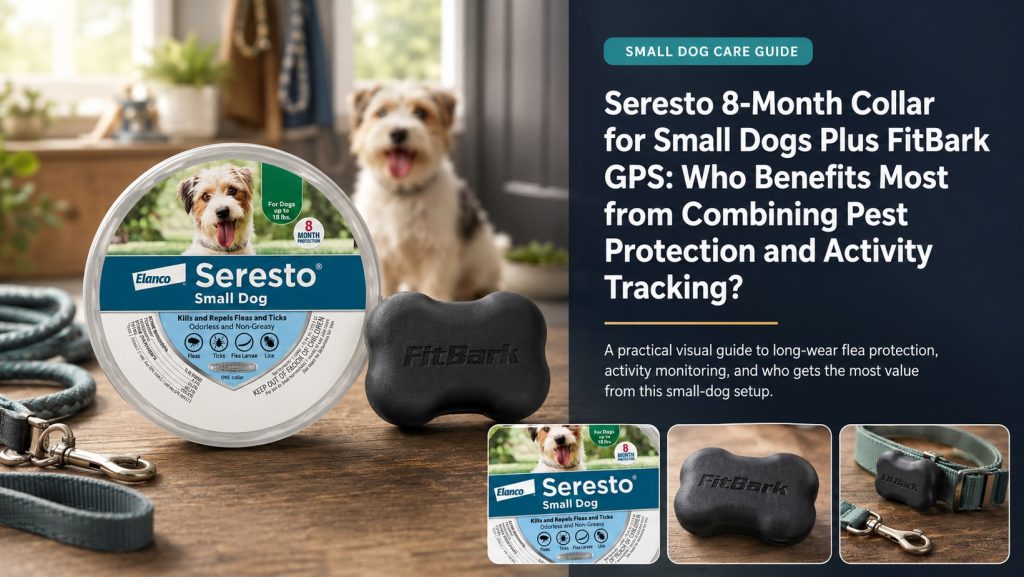
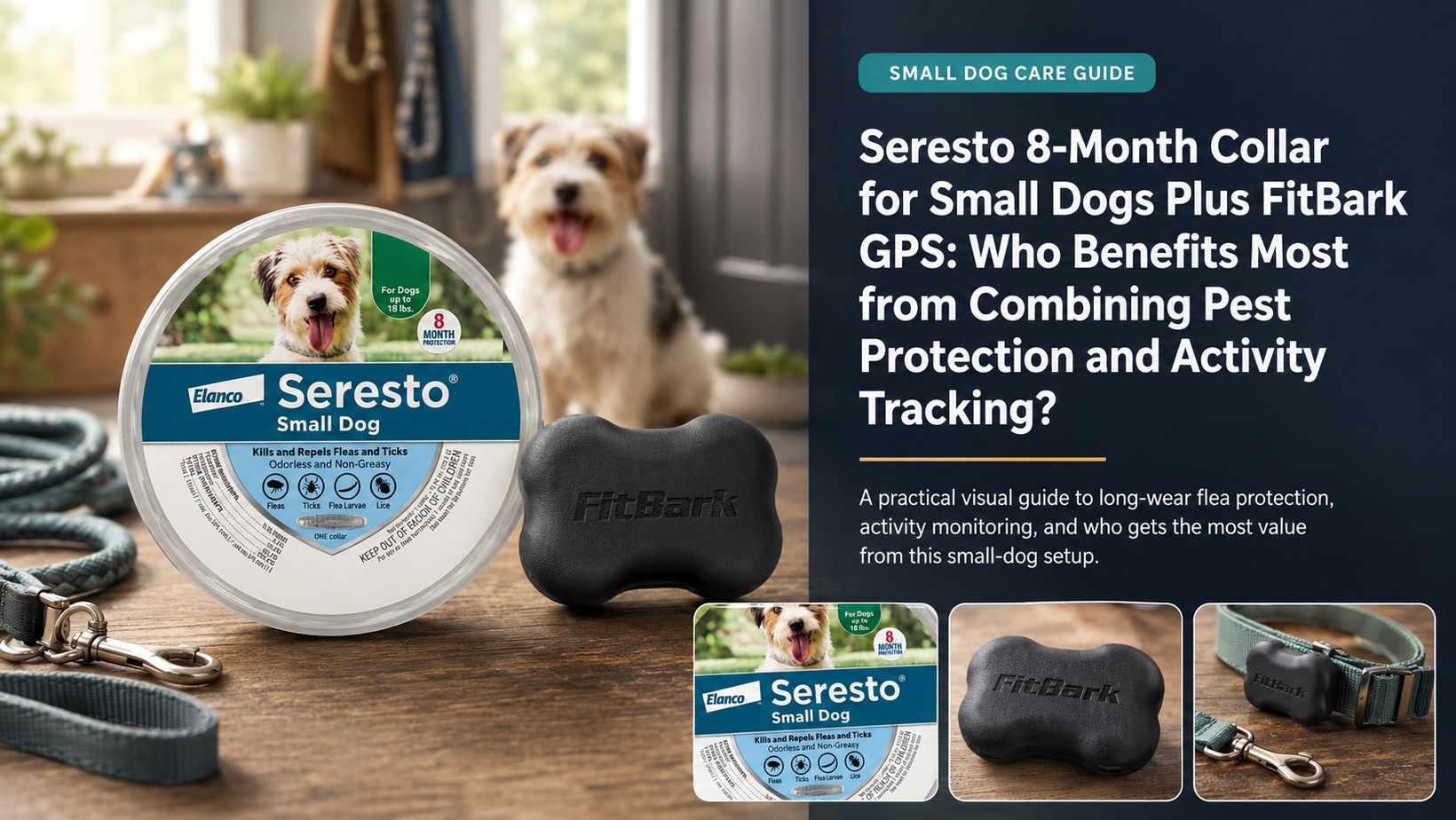
Seresto 8-Month Collar for Small Dogs Plus FitBark GPS combines two separate jobs on the dog’s neck: a flea-and-tick collar and a GPS/activity tracker. That pairing can be practical for owners who want long-duration parasite protection and location or activity data, but it also creates a fit-management problem that should be solved before both devices are worn together.
The pest collar must fit according to its label and remain in appropriate skin-and-coat contact. The tracker needs secure attachment and enough clearance that it does not force the pest collar into an awkward angle, rub the neck, or make the overall setup too heavy for a small dog.
This type of bundle is most useful for owners who will actually maintain both systems: checking collar fit and skin condition, replacing parasite protection on schedule, charging or monitoring the tracker, and reviewing outdoor routines instead of treating technology as a substitute for supervision.
Who Should Consider Seresto 8-Month Collar for Small Dogs Plus FitBark GPS
The combined setup makes the most sense for an appropriately sized small dog that spends meaningful time outdoors, has an owner who wants a location/activity record, and can comfortably wear both pieces of equipment. Owners should confirm the exact small-dog Seresto size rather than choosing by neck measurement alone, because product weight categories and label directions matter.
FitBark provides location and activity information; it does not repel fleas or ticks. Likewise, the Seresto collar does not replace identification, recall training, a secure leash, fencing, or daily tick checks. The value comes from managing two complementary tools without confusing their roles.
Fit, Tracking, and Outdoor-Wear Checks
Start with the Exact Small-Dog Bundle
The small dog flea collar with tracker listing gives owners the correct bundle context before they compare fit and maintenance needs.
Check that every component in the package matches what the dog needs. Do not use the bundle listing as a substitute for the individual Seresto and FitBark instructions.
Keep Activity Data Separate from Pest Claims
For dog activity tracking pest protection, FitBark’s official information explains its GPS, location-history, activity, sleep, and health-monitoring functions.
Those data can support an outdoor routine, but a tracker cannot tell whether a flea or tick has attached. Continue hands-on coat checks after walks in tick habitat.
Verify the Collar Size and Label
An eight month collar for small breeds should be selected from the dog’s weight and the current product label, then fitted with the recommended clearance.
Recheck fit after grooming, weight change, or coat growth. A collar that was comfortable in one season can fit differently after the coat changes.
Decide Whether GPS Features Match the Dog
Use GPS style dog activity monitoring only when the owner has a real need for location history, activity trends, or escape alerts and will keep the device maintained.
A tracker adds charging, app access, and subscription considerations. Confirm those details before relying on it for travel or off-property activity.
Outdoor Dogs Still Need Daily Checks
A broader outdoor small dog flea prevention plan should combine the chosen collar with grooming checks and local parasite advice.
Run fingers through the coat after brushy walks and look around ears, eyelids, under the collar, between toes, and around the tail where ticks can be difficult to see.
Use Wearable Data as Context, Not Diagnosis
A wearable dog health tracking bundle can organize equipment choices, but changes in activity or sleep should be interpreted alongside the dog’s behavior and veterinary history.
If the tracker shows an unusual trend and the dog also seems ill, lethargic, painful, or off food, contact a veterinarian rather than treating the app as a diagnostic result.
Two-Device Collar Setup Checklist
Manage the parasite collar and tracker as separate systems even when they are sold together.
| Item | Primary Job | Owner Maintenance |
|---|---|---|
| Seresto collar | Labeled flea-and-tick protection | Fit, skin checks, bathing guidance, replacement date |
| FitBark GPS | Location and activity monitoring | Attachment, charging, app and plan status |
| ID tag or microchip | Identification | Keep contact information current |
| Leash or secure boundary | Physical control | Inspect hardware and enclosure |
| Daily coat check | Find ticks and skin changes | Hands-on inspection after outdoor exposure |
Set Up the Bundle Without Crowding the Neck
Fit the Seresto collar first according to the package instructions. Then attach the FitBark device in the location its manufacturer recommends, checking that the tracker does not push against the buckle, concentrate pressure, or prevent the collar from moving naturally with the dog.
For the first week, inspect the neck at least daily. Look under both devices for redness, broken hairs, moisture, odor, or pressure marks. Note the Seresto replacement date and the tracker maintenance schedule in the same calendar so neither is forgotten.
Before the Dog Wears Both Devices
- Confirm the correct Seresto weight range
- Read both manufacturers’ instructions
- Fit the pest collar before adding the tracker
- Check that the tracker does not distort collar fit
- Confirm ID information is current
- Test GPS/app connection before travel
- Inspect the neck daily at first
- Continue post-walk tick checks
- Record replacement and charging dates
If two devices make the dog’s neck crowded, solve the fit problem rather than forcing the bundle. A veterinarian or experienced fitting professional can help when skin sensitivity or unusual anatomy complicates wear.
A Tracker Does Not Change Pesticide Collar Precautions
Monitor for skin irritation or other adverse signs after starting a flea-and-tick collar. If the dog develops a concerning reaction, remove the collar as directed and contact a veterinarian. Keep the package and lot information available.
Water exposure, bathing frequency, age, weight, and other parasite treatments can affect product decisions. Read the current Seresto label rather than assuming an “eight-month” phrase applies identically under every use pattern.
Elanco’s official Seresto product information describes the collar’s long-duration use and water-exposure considerations; use the current package label for the exact dog-specific fitting and safety directions.
Use Seresto 8-Month Collar for Small Dogs Plus FitBark GPS as Two Well-Managed Tools
Seresto 8-Month Collar for Small Dogs Plus FitBark GPS is most compelling for owners who want both parasite protection and meaningful location or activity information and who are willing to maintain the fit of both devices.
Keep the roles clear: the collar addresses labeled pests, the tracker supplies data, and the owner still provides supervision, daily skin and tick checks, identification, and veterinary care.
Frequently Asked Questions
Can FitBark replace a flea or tick product?
No. FitBark is a location and activity-monitoring device, not parasite protection.
Should both devices sit tightly together?
No. Each device should be fitted according to its manufacturer instructions without creating pressure, rubbing, or distorted collar placement.
How often should I check the dog’s neck?
Check frequently when a new collar or tracker is introduced and continue routine skin inspections throughout wear.
Does an eight-month collar always last eight months with frequent swimming?
Water exposure and bathing can affect labeled duration. Review the current Seresto instructions for the dog’s real routine.
Is GPS enough protection for an off-leash dog?
No. GPS is a backup information tool. Secure boundaries, leash control where appropriate, identification, and reliable handling remain important.
