
A hook and a pair of fine-tipped tweezers look unlike each other, yet both are sold for removing attached ticks. Their different shapes can help or hinder access depending on the bite location. Instead of declaring one tool universally best, consider which one lets you follow a clear removal method while avoiding pressure on the tick's body.
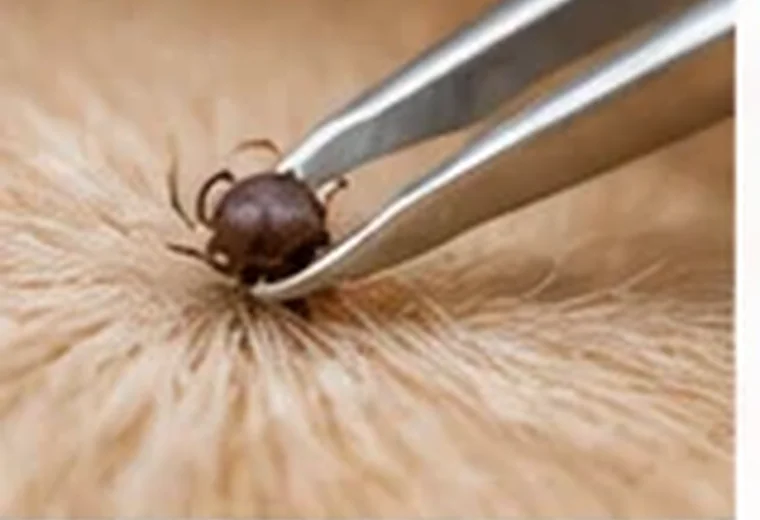
Tweezers offer a precise close grip
The CDC recommends fine-tipped tweezers for prompt tick removal: grasp the tick close to the skin and pull upward with steady, even pressure. Avoid twisting or jerking during this method, and do not squeeze the tick's body. Good alignment and comfortable control matter more than the tool's finish or color.
Hooks require their own instructions
Some purpose-built hooks slide under the tick and may specify a different motion. Do not combine a hook maker's instructions with tweezers guidance by guesswork. Check that the tool's opening can reach the attachment area and that the owner understands how to operate it. A tiny tick near an ear may be particularly difficult to engage with a larger hook.
Material, cleaning and storage
| Comparison point | Hook | Fine-tip tweezers |
|---|---|---|
| Working access | Depends on opening and angle | Depends on tip precision |
| Technique | Follow device-specific directions | CDC close-grip, steady upward pull |
| Cleanup | Inspect grooves and edges | Clean contacting tips and joint |
| Travel fit | Some hooks are very compact | May need a protective cap |
Depends on opening and angle
Follow device-specific directions
Inspect grooves and edges
Some hooks are very compact
Practice reading, not removing
Before heading outdoors, take the tool out of its package and study how it is supposed to work. Do not practice on an attached tick by repeatedly manipulating it. If you cannot reach the area safely, a veterinarian can help. Afterwards, clean the bite area as directed and watch for concerning changes in the dog.
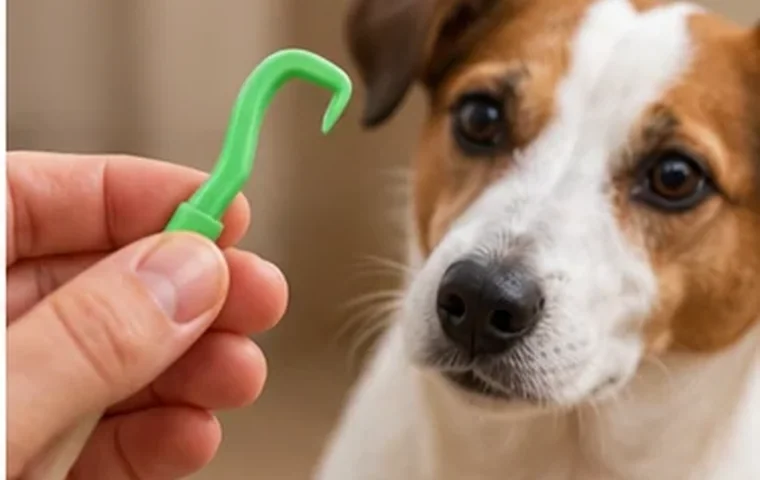
Choose a Tool for the Actual Attachment Site
A tick is visible close to the edge of a dog's ear. A large hook may be difficult to position there, whereas fine-tipped tweezers might offer a closer grip if the owner is comfortable using them. In another body location, a specialized device could be suitable when used according to its instructions. The important issue is clear access without repeated poking or squeezing. If the location is close to the eye or the dog will not hold still, ask a veterinarian for help rather than persisting with an unsuitable tool.
The practical purchase
The Tick Remover Tools category includes hooks and tweezer kits. Choose based on reliable access and understandable instructions rather than a promise that a particular gadget always removes an entire tick. Prompt, careful action is more important than a complicated kit.
Compare current product listings and check their full instructions before buying. The products are catalog examples, not independently tested recommendations.
Explore Tick Remover Tools