
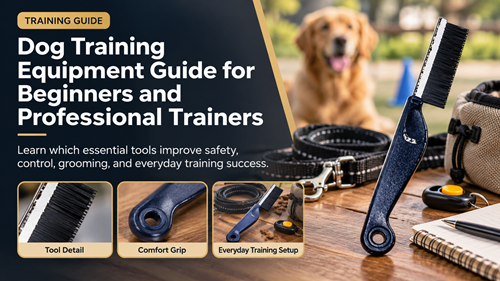
Dog training equipment should make a training plan easier to deliver, easier to repeat, and safer to manage. Beginners often buy too many items before they know which skills they are teaching, while experienced trainers usually organize equipment by session goal, environment, dog size, and reinforcement strategy.
A productive kit can be simple: a secure collar or harness, standard leash, long line for controlled distance, rewards, marker or clicker, treat pouch, mat, water, and appropriate safety gear for the location. Specialty equipment belongs only when it solves a defined training problem.
This guide separates foundation tools, outdoor equipment, session organization, and professional workflow so owners can build a useful kit without collecting redundant accessories.
Dog Training Equipment: Build the Kit Around the Lesson
Equipment should answer one of four questions: how will the dog be safely managed, how will correct behavior be marked, how will reinforcement be delivered, and how will the environment be arranged so the dog can succeed?
Beginners benefit from fewer moving parts. A leash, food rewards, and a clear marker can teach many foundation behaviors. Professional trainers may carry duplicates, multiple leash lengths, neutral props, sanitation supplies, and documentation tools because they work with different dogs in different environments.
The phrase dog training equipment covers both physical gear and session infrastructure. Storage, hydration, lighting, surface traction, and emergency planning can be as important as the item in the handler’s hand.
Core Tools for Beginner and Professional Training Sessions
Start with Clear Obedience Markers
dog obedience tools such as a clicker, verbal marker, treat pouch, mat, and leash can support clear timing without adding unnecessary complexity.
A marker should tell the dog exactly which behavior earned reinforcement. The equipment works only when the handler’s timing and reward placement are consistent.
Keep Beginner Supplies Organized
Use the pet training supplies category as a checklist rather than a shopping target. Buy the pieces needed for the current stage and add tools only when the training plan expands.
A small dedicated bag prevents sessions from stalling while the handler searches for treats, spare clips, waste bags, water, or a long line.
Manage Behavior by Changing the Environment
Good dog behavior control starts with distance, barriers, leash management, reward placement, and predictable routines rather than punishment.
If the dog cannot respond at the current difficulty, reduce distraction or increase distance. Equipment should create a workable learning environment instead of forcing behavior through discomfort.
Choose Durable Gear for Repeated Sessions
Professional handlers often need professional dog gear that can be cleaned, adjusted quickly, and used with gloves or wet hands.
Inspect clips, stitching, handles, and storage after repeated use. A professional-looking item is not useful if hardware becomes difficult to operate or straps retain water and odor.
Add Accessories for Specific Exercises
canine training accessories can include cones, targets, tug toys, portable mats, bumpers, whistles, and visibility equipment.
Match the accessory to a measurable skill. For example, a mat can create a station behavior, cones can define boundaries, and a tug can function as a high-value reward for some dogs.
Keep the Training Method Evidence-Based
For training essentials, AVSAB recommends reward-based training methods and provides guidance on choosing trainers who avoid aversive techniques.
This principle applies at every skill level. More advanced equipment should not mean more force; it should allow more precise management, reinforcement, and repetition.
Dog Training Equipment by Session Type
A good kit changes with the environment and the skill being trained.
| Session | Core Equipment | Optional Add-Ons |
|---|---|---|
| Home foundations | Rewards, marker, mat, short leash | Target, toy reward |
| Neighborhood skills | Collar or harness, leash, rewards | Treat pouch, visibility light |
| Recall practice | Long line, gloves, rewards | Whistle, high-visibility line |
| Sport foundations | Rewards, target props, tug or toy | Cones, jumps, place markers |
| Professional appointments | Duplicate leashes, rewards, sanitation | Forms, camera, portable barriers |
| Field sessions | Long line, water, first-aid, visible gear | Whistle, bumpers, GPS tracking where appropriate |
Create a Repeatable Training Bag and Session Routine
Separate equipment into management, reinforcement, exercise, and safety sections. Keep food rewards in washable containers, clean shared items between dogs, and inspect long lines for abrasion before outdoor work.
Write the session objective before adding equipment. A five-minute foundation session may need only a leash and rewards, while a field session may need water, long-line gloves, visibility gear, and a transport plan.
For a simpler beginner list, compare the site’s dog training equipment for beginners article with the professional workflow above.
Training Bag Checklist
- Secure collar or harness
- Standard leash
- Long line when needed
- High-value rewards
- Marker or clicker
- Treat pouch
- Portable mat
- Water and bowl
- Waste bags and cleanup supplies
- Basic first-aid items
Professional trainers should also carry duplicate management gear in multiple sizes, but every item should have a defined purpose and a regular inspection schedule.
Equipment Cannot Compensate for an Unsafe Training Plan
Stop the session when the dog is showing sustained fear, panic, pain, or inability to disengage. Increase distance, reduce difficulty, and reassess the training environment before adding more equipment.
A qualified reward-based trainer or veterinary behavior professional is appropriate when aggression, severe anxiety, resource guarding, or another complex behavior creates risk to the dog or people.
Build a Smaller, Better Organized Training Kit
Dog training equipment is most effective when every item supports safe management, clear communication, or reinforcement. Beginners usually need fewer tools than marketing suggests, while professionals need reliability, duplicates, and fast organization.
Prioritize humane methods, fit, durability, and a repeatable session plan. Add specialty gear only after the skill and environment justify it.
Frequently Asked Questions
What dog training equipment should a beginner buy first?
Start with a secure collar or harness, leash, rewards, marker or clicker, treat pouch, and a safe practice space.
Do professional trainers use different equipment than pet owners?
They may carry more sizes, duplicates, long lines, props, sanitation supplies, and documentation tools, but the learning principles remain the same.
Is a clicker necessary for dog training?
No. A consistent verbal marker can also work. The important point is marking the desired behavior clearly and reinforcing it.
When should I add a long line?
A long line is useful when adding controlled distance to recall or outdoor skills while the dog is not yet ready for off-leash freedom.
How often should training gear be inspected?
Check high-load hardware, stitching, leash clips, and long lines before outdoor or high-distraction sessions and replace damaged items promptly.
