
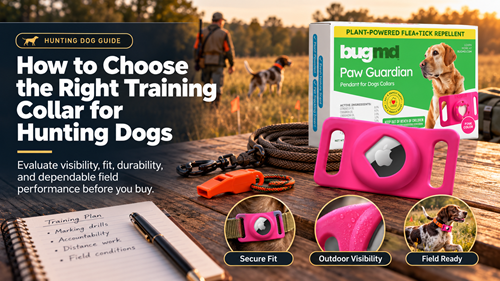

A training collar for hunting dogs should be chosen around field safety, fit, visibility, weather, and the skills the dog already understands. Hunting environments add distance, water, brush, wildlife distraction, vehicles, and changing terrain, so ordinary backyard assumptions do not always transfer to the field.
The collar is only one part of the system. Reliable recall, steadiness, retrieving foundations, leash manners, conditioning, identification, hydration, and emergency planning all deserve attention before a dog works at distance.
This guide focuses on field-ready buying decisions while keeping training humane and reward based. Equipment can help manage a working environment, but it should not replace foundational training or veterinary care.
Training Collar for Hunting Dogs: Define the Field Job First
A pointing dog, retriever, flushing dog, and tracking dog may work at different distances and through different cover. Collar width, visibility, attachment points, and water resistance should reflect the dog’s task rather than a generic hunting label.
High-visibility colors and clear identification are practical in brush and low light. Smooth hardware can reduce snag points, while waterproof materials make cleanup easier after mud or water retrieves. Fit should still allow normal breathing, swallowing, and neck movement.
The training collar for hunting dogs should also integrate with the dog’s other equipment. Avoid crowding the neck with multiple devices, and make sure tracking or identification units do not strike each other during running or swimming.
Field Features to Compare Before a Hunting Season
Train the Dog Before the Hunt
AKC guidance on bird dog training emphasizes obedience, conditioning, retrieving work, and exposure to field conditions before hunting.
Build skills well ahead of the season. A new collar introduced on opening morning adds another variable when the dog is already processing scent, terrain, noise, and excitement.
Build a Complete Field Kit
Use hunting dog equipment to think beyond the collar: water, first aid, identification, lead, long line, towel, transport restraint, and visibility gear all belong in the plan.
Pack equipment where it can be reached quickly with cold or wet hands. Field safety depends on logistics as much as the collar itself.
Inspect Field Hardware and Fit
A field training collar should remain secure through running, brush contact, swimming, and repeated handling.
Check buckle closure, strap edges, D-rings, rivets, and adjustment points. Reinspect after the first field session because wet fur and heavy movement can change apparent fit.
Prioritize Visibility and Outdoor Handling
Useful outdoor dog gear includes high-visibility accessories, water gear, long lines, and handling tools suited to the terrain.
Dark or camouflaged equipment may be harder to spot in cover. Visibility can be a safety feature for handlers, partners, and other hunters.
Use Accessories to Support Known Skills
working dog accessories such as whistles, bumpers, place markers, and long lines can help structure field drills.
Introduce one accessory at a time in familiar training areas. The field should test established skills rather than become the first place the dog learns what equipment means.
Organize Supplies by Dog and Task
hunting pet supplies should be labeled for the individual dog when several dogs travel together.
Keep separate water, medication, identification details, and correctly fitted gear for each dog. One-size assumptions are especially risky in multi-dog hunting groups.
Hunting Collar and Field Gear Comparison
Match features to the environment instead of chasing the longest specification list.
| Field Condition | Priority | Check Before Use |
|---|---|---|
| Dense brush | Visibility and low snag profile | Edges, tag position, buckle security |
| Water retrieves | Water resistance and quick drying | Hardware corrosion, strap stretch |
| Long field sessions | Comfort and identification | Skin, coat, hydration, fit |
| Cold weather | Glove-friendly handling | Buckles and clips operate easily |
| Multiple dogs | Distinct identification | Individual fit and records |
| Travel to hunt site | Secure transport plus spare lead | Backup ID and emergency contacts |
Prepare the Hunting Dog Before Increasing Field Distance
Condition the dog physically before long field days and practice basic cues in progressively more distracting environments. Use controlled distance tools when needed so success is not dependent on the dog making a perfect decision in an unsafe setting.
Keep a written pre-hunt equipment check. Verify identification, collar fit, paw condition, water, first aid, weather, legal requirements, and emergency veterinary contacts before leaving the vehicle.
When range becomes a buying question, compare it separately with the site’s dog training collar range guide rather than assuming the largest advertised number is automatically useful.
Field-Day Equipment Check
- Confirm collar fit
- Verify identification
- Inspect buckle and hardware
- Pack standard lead and long line
- Carry water and bowl
- Add high-visibility gear
- Pack canine first aid
- Check paw condition
- Review emergency contacts
Inspect the dog again after the field session. Wet fur, seeds, burrs, friction, and hidden skin irritation can develop under or around equipment even when the collar looked correct at the start.
Avoid Aversive Shortcuts in High-Distraction Field Training
Hunting environments are highly stimulating, which makes gradual preparation more important rather than less. AVSAB recommends reward-based training and advises against electronic shock collars and other aversive methods.
If the dog cannot recall reliably around wildlife, use a long line, fenced training ground, or professional reward-based field trainer rather than granting off-leash freedom too early. Safety management is not a training failure.
Choose Field Gear That Supports an Already Trained Dog
A training collar for hunting dogs should improve identification, fit, visibility, and handling in the environment where the dog works. It should not be expected to create field reliability by itself.
Build obedience and recall first, test equipment before the season, and keep each dog’s field kit organized around task, terrain, weather, and emergency planning.
Frequently Asked Questions
What collar color is best for hunting dogs?
High-visibility colors are often practical because they are easier for handlers and hunting partners to see in brush or low light.
Should a hunting dog wear several collars at once?
Avoid unnecessary crowding. Multiple devices can strike each other, trap debris, or change fit. Use only what is needed and check spacing carefully.
How should I test a new collar before hunting?
Use it during short controlled training sessions, including movement, water, and brush exposure where appropriate, then recheck skin and fit.
Is a long line useful for hunting dog recall practice?
Yes. A long line can add controlled distance while recall is being reinforced, especially before the dog is ready for off-leash work.
When should a professional trainer help?
A qualified reward-based field trainer can help when the handler needs structured retrieving, steadiness, recall, or environment-specific training.
