
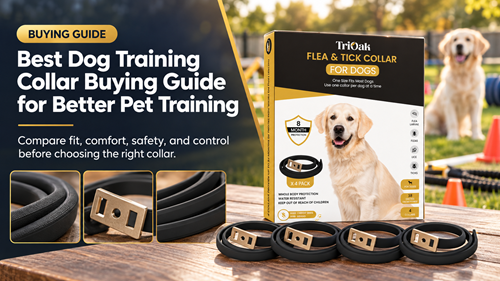
A dog training collar buying guide should start with the behavior you want to teach, not with the strongest feature list on a product page. Collar fit, leash compatibility, visibility, weather resistance, handler control, and the dog’s comfort all matter, but training outcomes still depend on clear cues, timing, reinforcement, and practice.
For everyday obedience, most owners need a secure flat collar or harness, a standard leash, rewards, and a plan that builds skills gradually. Specialized equipment can support identification, long-line work, or field handling, but it should not replace learning foundations.
Use this guide to compare purpose, fit, safety, range claims, and the wider training setup before buying equipment for a puppy, family dog, active outdoor dog, or working companion.
Dog Training Collar Buying Guide: Start with the Training Goal
Training equipment is most useful when each item has one defined job. A regular collar can carry identification and provide ordinary leash attachment. A harness can reduce pressure on the neck for some activities. A long line can provide controlled distance for recall practice. Field gear may add visibility, waterproofing, or easier handling in brush.
The dog’s age, size, coat, neck shape, activity level, and training history should influence the purchase. A heavy unit can overwhelm a small dog, while narrow straps can disappear into a dense coat. Hardware that works indoors may become difficult to grip with gloves, rain, or mud.
A dog training collar buying guide is therefore a system check: decide what the dog is learning, select the least intrusive equipment that supports that lesson, and test fit before adding distance or distractions.
Features to Compare Before Buying Training Gear
Match Collar Type to the Job
Browse training collars for dogs as a category comparison, then separate identification collars, walking equipment, field gear, and training accessories by purpose.
A collar that looks rugged is not automatically appropriate for every training problem. Hardware should support management and communication without creating pressure, fear, or confusion.
Treat Remote Features with Extra Caution
If a listing uses the phrase remote dog collar, check what the remote function actually does. The American Veterinary Society of Animal Behavior recommends reward-based training and advises against aversive electronic shock collars.
A remote feature that adds tracking, light, sound used as a neutral cue, or location data is a different buying question from a device designed to deliver discomfort. Read the manual and training method, not only the marketing term.
Build Obedience Around Reinforcement
For everyday skills, obedience training tools can include a marker, treats, leash, long line, mat, and toy rewards.
Good equipment makes the desired behavior easier to teach and reward. It should not make the handler dependent on escalating corrections when the dog is distracted.
Check the Whole Training Setup
Compare pet training equipment as a system rather than buying one collar in isolation. Leash length, reward storage, visibility, footwear, water, and safe training space can matter just as much.
Outdoor owners should also consider whether metal hardware gets hot or cold, whether buckles trap dirt, and whether straps remain readable and adjustable after repeated wet use.
Plan for Behavior, Not Just Control
A useful dog behavior training plan identifies the behavior to reinforce, the environment, and the level of distraction before equipment is changed.
If pulling, fear, reactivity, guarding, or aggression is significant, work with a qualified reward-based trainer or veterinary behavior professional rather than trying to solve the problem by purchasing stronger gear.
Keep Puppy Gear Light and Adjustable
For growing dogs, puppy training accessories should be easy to resize and simple enough that the puppy can learn without carrying unnecessary weight.
Check fit often during growth. A collar that was correct two weeks ago can become too tight quickly, especially on fluffy breeds where the strap is hidden under the coat.
Dog Training Collar Buying Comparison
Use this table to narrow the purchase before comparing brand-specific details.
| Training Situation | Useful Equipment Priority | Buying Check |
|---|---|---|
| Daily walking and manners | Comfortable collar or harness plus leash | Fit, hardware, visibility, ID attachment |
| Puppy foundations | Light adjustable gear and rewards | Growth room without looseness |
| Recall practice | Long line and high-value rewards | Safe length, grip, snag risk |
| Outdoor field sessions | Weather-resistant visible equipment | Water, mud, distance, glove handling |
| Behavior concerns | Management plus professional plan | Avoid escalating aversive equipment |
| Multiple dogs | Clearly identified individual gear | Correct size and settings for each dog |
Test Fit Before Increasing Training Difficulty
Fit the collar while the dog is calm. Confirm that the buckle closes securely, the strap lies flat, and identification tags do not interfere with leash hardware. Recheck after several minutes of movement because dense fur can hide looseness or pressure points.
Begin training in a low-distraction environment. Reinforce the behavior you want, then change only one variable at a time: distance, duration, distraction, or location. When several variables change together, it becomes difficult to know whether the dog understands the task.
If range later becomes part of the buying decision, use the site’s training distance planning guide to compare advertised distance with realistic terrain, visibility, and safe handling.
Pre-Purchase Collar Checklist
- Define the training behavior
- Measure the dog’s neck correctly
- Check current weight and growth stage
- Confirm leash or long-line compatibility
- Inspect buckle and D-ring construction
- Review weather and water resistance
- Read the complete user manual
- Choose reward-based training methods
- Recheck fit after the first sessions
Keep the receipt and packaging until the equipment has been tested safely. Sizing charts can vary by manufacturer, so the dog’s actual fit matters more than the label size.
Use Training Equipment Without Replacing Humane Instruction
AVSAB’s current humane training position recommends reward-based methods and identifies electronic shock collars, prong collars, choke chains, leash corrections, and other aversive methods as approaches to avoid. Equipment should help manage the environment while the dog learns through clear reinforcement.
If a dog shows fear, freezing, avoidance, redirected aggression, or a sudden change in behavior during training, stop and reassess the method. Pain, illness, and anxiety can also affect behavior, so veterinary evaluation may be appropriate.
Choose Training Gear for Clarity, Fit, and Repeatable Practice
A dog training collar buying guide is most useful when it keeps the purchase tied to the lesson. Start with fit and comfort, then add only the features that solve a real handling or environment problem.
Reward-based practice, consistent cues, and gradual increases in difficulty create the training progress. The collar or accessory should support that process, not become the process itself.
Frequently Asked Questions
What is the best collar for basic dog training?
A secure, properly fitted flat collar or an appropriate harness is often enough for basic reward-based training. The exact choice depends on the dog, activity, and handling needs.
How tight should a training collar be?
Follow the manufacturer’s fit directions and make sure the collar is secure without restricting breathing, swallowing, or normal movement. Recheck fit on growing dogs.
Do I need a remote collar to teach recall?
No. Recall can be taught with reward-based methods, a leash or long line, careful management, and gradual distraction training.
What should I buy first for a puppy?
Start with lightweight adjustable walking gear, identification, a leash, rewards, and simple training accessories rather than a large collection of specialized devices.
When should I hire a trainer instead of changing equipment?
Seek qualified help when fear, aggression, severe reactivity, or repeated training breakdowns make normal practice difficult or unsafe.
