
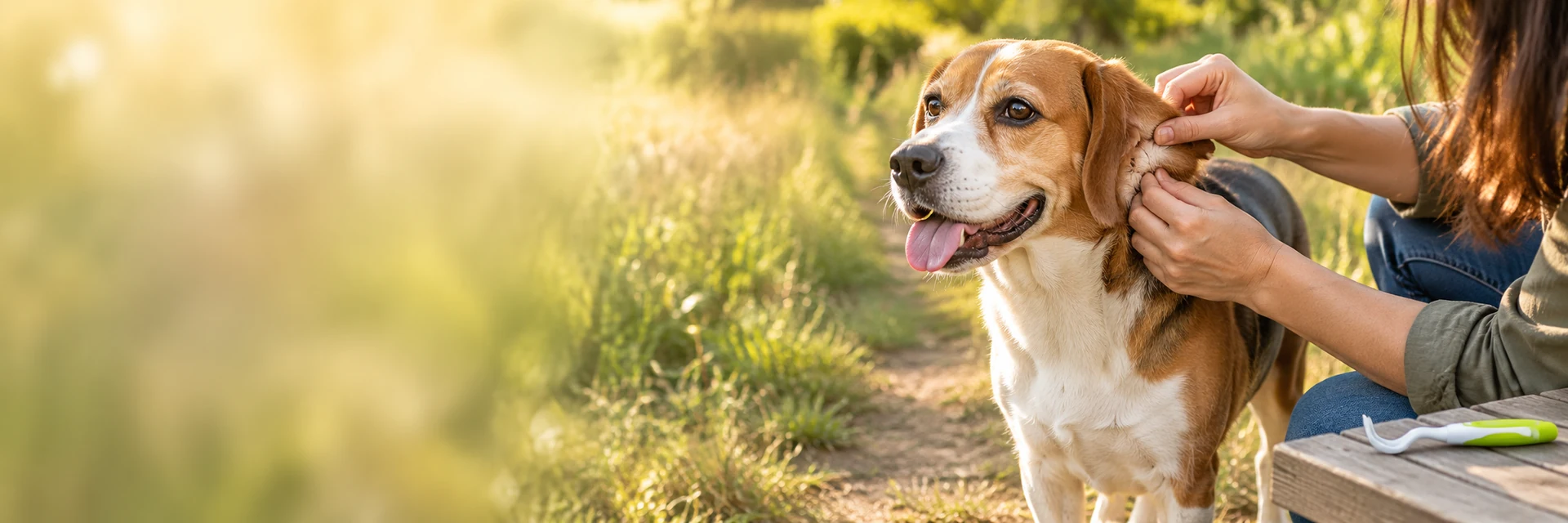
A dog can finish a trail walk looking perfectly comfortable while an attached tick remains concealed under fur. A short inspection immediately after entering the home can make a difference, especially following time in tall grass, brush or wooded paths. Turn the check into a predictable, low-stress routine rather than searching only when the dog starts scratching.
Begin before the dog settles on the sofa
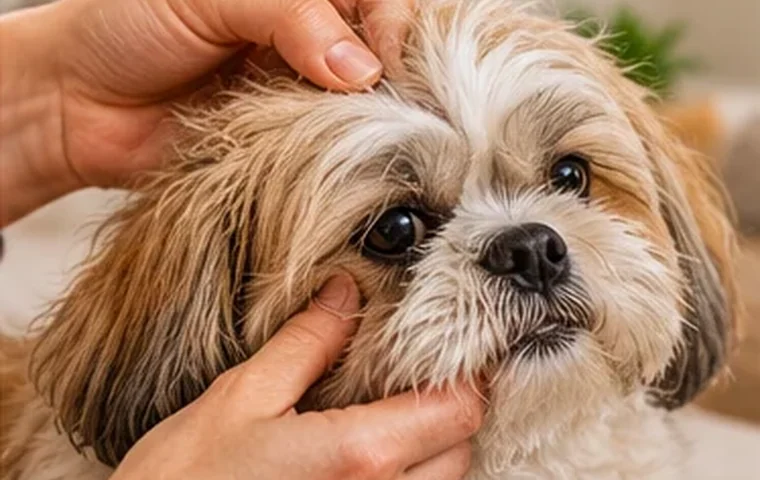
Choose a well-lit area where you can handle the dog comfortably. Check the head, ears, collar line and neck, then move down the body. Inspect beneath the legs, between toes, around the groin and near the tail. Keep fingers close to the skin where practical, parting dense fur gently to see sheltered places.
A long coat needs a slower visual method
On double coats, separate hair into manageable sections and feel carefully for unfamiliar small bumps. A grooming comb may help separate hair, but it is not necessarily a tick-removal tool. For short-haired dogs, use a light touch and good illumination to avoid mistaking a skin feature for a tick. Stop and seek help if you are unsure what you found.
What to do with a clear finding
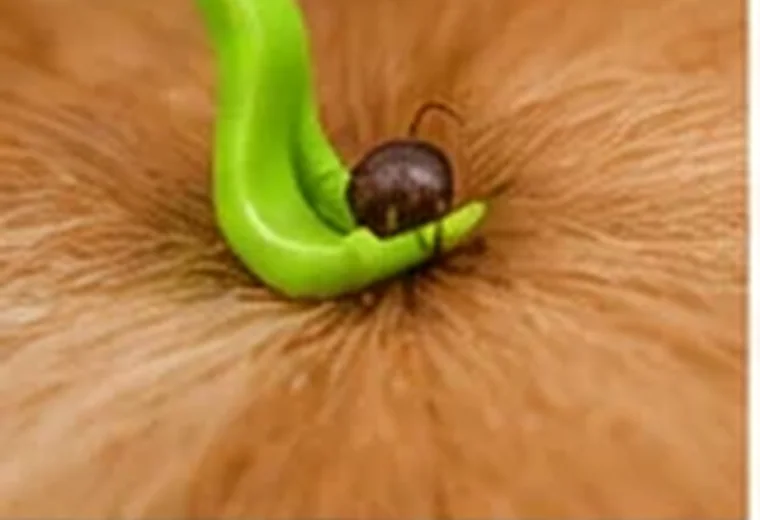
For an attached tick, follow recommended removal guidance promptly with a suitable tool. Fine-tipped tweezers should grasp the tick close to the skin and pull steadily upward. Do not use heat or oils. Afterwards, clean the area as advised, record the date and location and contact the veterinarian for persistent irritation or new symptoms.
A repeatable departure checklist
Tick prevention and inspection work together: speak to the veterinarian about an eligible preventive product based on local risks and the dog's health. Keep a clean removal tool accessible at home and in the hiking kit. Inspection is a habit that can reduce delayed discovery; it cannot promise that every tick will be spotted immediately.
The Collar Line Is Easy to Miss
A dog returns from a grassy park and immediately curls up on its bed. The owner checks the paws but forgets the collar area and behind the ears, where hair and equipment can hide small objects. A more consistent routine starts at the head and moves toward the tail in the same order every time. Remove the collar temporarily if that can be done safely, then inspect underneath. A reliable sequence is more valuable than an increasingly frantic search whenever the owner remembers another possible hiding place.
Give the dog a calm finish
Reward cooperation, offer water and put the tools away clean. The easier the routine feels, the more likely you are to repeat it after every outing without rushing through the difficult areas.
Compare current product listings and check their full instructions before buying. The products are catalog examples, not independently tested recommendations.
Explore Tick Remover Tools