
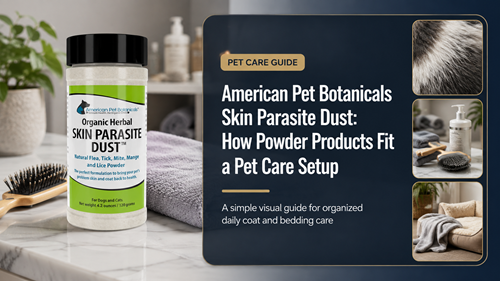
American Pet Botanicals Skin Parasite Dust appeals to owners who prefer a dry product instead of a shampoo, spray, collar, or topical drop. The powder format changes the practical questions: where to apply it, how to keep airborne dust away from eyes and breathing zones, how much residue remains in the coat, and how to keep the container controlled around children and other pets.
A powder should never be chosen only because the front label uses botanical or herbal language. Owners still need to read the entire current label, identify what the product is intended to control, confirm which species and ages are allowed, and understand whether the product is a registered pesticide, a grooming product, or another type of pet-care item.
The goal of this guide is to place a dry product inside a responsible pet-care setup: preparation, controlled application, coat inspection, cleanup, storage, and the decision about when a veterinarian should guide flea or tick control instead.
How American Pet Botanicals Skin Parasite Dust Changes the Routine
Liquid products make wetness obvious. Powder can be harder to judge because a thin layer may disappear into the coat while excess product becomes airborne or falls onto floors and bedding. That makes application control and cleanup part of the buying decision.
The owner also needs to separate pet treatment from premise treatment. A product labeled for the animal may have different instructions from a carpet or kennel powder. Never assume that a dust can be spread onto bedding, rugs, furniture, or outdoor areas unless the current label specifically allows that use.
For dogs and cats sharing a home, species directions matter. EPA pet-pesticide guidance emphasizes using products only on the species and size described on the label. A product suitable for a dog is not automatically suitable for a cat, and vice versa.
Questions to Ask Before Adding a Dry Powder Product
Start with the Exact Product and Ingredient List
An herbal parasite powder for pets should be evaluated from the complete current package, not from the word herbal. Check every listed ingredient, the intended pest, the approved species, age restrictions, application directions, and warning language.
If the online listing and the physical package differ, use the current labeled package and contact the manufacturer or veterinarian when the difference affects safety or dosing.
Compare Other Botanical Powder Formats
A botanical dog flea dust can contain a very different botanical blend from another product in the same shopping category. Comparing two powders by ingredient list is more useful than comparing the words natural, organic, or herbal.
Essential oils, plant extracts, and mineral powders can still irritate skin or airways. Natural origin does not remove the need for controlled application and individual tolerance checks.
Plan the Application Before Opening the Shaker
Good pet coat powder application planning starts by reading the label in a clean, dry area. Decide where the pet will stand, how the face will be protected, how excess powder will be prevented from drifting, and how hands and surfaces will be cleaned afterward.
Never improvise a large cloud of dust to make application faster. The useful amount is the amount the label directs, placed where the product is intended to work.
Decide Whether Dry Format Is Actually Convenient
A dry pest-control grooming product can be useful for owners who dislike wet bathing or liquid spray, but dry application is not automatically cleaner. Fine residue can transfer to floors, furniture, bedding, hands, and other pets.
Think about coat length, indoor ventilation, household children, cats that groom themselves, and whether the pet tolerates brushing or rubbing product through the coat.
Compare Dog-and-Cat Labeling Carefully
A powder option for dogs and cats may have species-specific minimum ages, retreatment intervals, and face-area precautions. Those details are more important than a shared product name or similar bottle.
In a multi-pet home, keep separate treatment notes so one animal is not accidentally retreated based on the other animal’s schedule.
Place Herbal Positioning in a Wider Care Plan
An herbal pet care dust can be one tool in a broader plan that includes flea combing, laundering bedding, environmental cleanup, and veterinary advice when infestation is persistent.
A dry product should not become a substitute for diagnosing hair loss, crusting, infection, allergy, or severe itch. Those signs can have causes that a parasite powder will not solve.
Powder Format Versus Other Flea-and-Tick Options
Use format differences to decide what the household can apply consistently and safely rather than choosing only by marketing language.
| Format | Useful When | Watch For |
|---|---|---|
| Dry pet powder | Owner wants a non-wet coat application | Airborne dust, residue, face protection |
| Treatment shampoo | A complete bath is practical | Contact time, rinsing, retreatment interval |
| Topical drops | Monthly measured dosing fits the dog | Weight range, dry time, species restrictions |
| Collar | Long-wear convenience is preferred | Fit, skin contact, individual reaction |
| Flea comb | Mechanical checking and removal are useful | Requires repeated careful grooming |
| Home treatment | Environmental infestation needs attention | Use only products labeled for the treated area |
Create a Low-Mess Powder Application Station
Choose a location away from food preparation, fans, open windows that create drift, and children’s play areas. Put down a washable towel or other surface only if the label allows indoor application. Have a brush, waste bag, and hand-cleaning supplies ready before the container is opened.
Work slowly through the coat and stop if the pet becomes stressed or if powder approaches the eyes, nose, or mouth. A product that cannot be applied safely to a particular pet is not a good fit simply because the ingredient list is appealing.
After application, secure the lid and store the container in its original packaging. Keep treatment records separate from ordinary grooming notes so every caregiver knows when the product was last used.
Dry Product Setup Checklist
- Read the complete current label
- Confirm species and minimum age
- Identify all botanical and active ingredients
- Choose a low-drift application area
- Keep powder away from the face
- Use only the directed amount
- Prevent other pets from licking residue
- Clean hands and nearby surfaces
- Record the application date
If the powder is intended for both the animal and the environment, treat those as separate label uses. Follow the exact directions for each surface instead of carrying the pet-application method over to carpets or bedding.
When Powder Use Should Stop
Stop use and seek veterinary guidance if the pet develops coughing, eye irritation, marked redness, swelling, tremors, vomiting, unusual lethargy, or another concerning reaction. Move the pet away from airborne dust and follow the product first-aid instructions.
Persistent fleas or ticks can require a coordinated plan for the pet and environment. Repeatedly adding more powder without identifying the infestation source can increase exposure without solving the problem.
Choose Dry Format for Control, Not for the Word Herbal
American Pet Botanicals Skin Parasite Dust can fit owners who prefer a dry application and can control powder placement, cleanup, and storage. The strongest buying decision comes from the complete label and a realistic application plan.
Keep botanical claims in perspective, prevent dust exposure, and involve a veterinarian when the pet has severe skin signs, repeated infestation, or is already using another flea-and-tick product.
Frequently Asked Questions
Is botanical parasite dust automatically safer than a conventional flea product?
No. Botanical ingredients can still irritate pets or people. Safety depends on the exact formulation, label directions, species, age, health, and exposure.
Can pet flea powder be used on carpets too?
Only if the current label specifically includes that use. Animal application and premise treatment are separate directions.
How can I reduce airborne powder during application?
Use the directed amount, apply slowly in a low-draft area, keep the container close to the target coat, and avoid the face and breathing zone.
Can I combine a powder with a flea collar or topical treatment?
Do not combine products automatically. Check both labels and ask a veterinarian when compatibility is unclear.
What if a cat licks powder from its coat?
Follow the product label and contact a veterinarian or poison-control resource if exposure is concerning or symptoms appear.
