
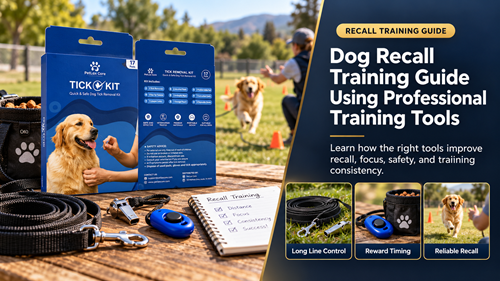
Dog recall training tools are most effective when they help the handler create successful repetitions. A long line protects the dog while distance increases, a marker identifies the correct response, and high-value rewards make returning to the handler worth leaving a distraction.
Reliable recall develops through reinforcement history, not one powerful tool. Start indoors or in a quiet fenced area, add distance gradually, and introduce outdoor distractions only after the dog understands the cue.
This guide combines beginner-friendly equipment with professional session organization for family dogs, outdoor dogs, and hunting companions while keeping the method reward based.
Dog Recall Training Tools: Build a Safe Learning Setup
The most important recall tool is a controlled environment where the dog can succeed. Indoors, a leash may not be needed. Outdoors, a long line lets the dog move away while preventing a failed recall from becoming a chase toward traffic or wildlife.
A marker such as a clicker or a short verbal word can identify the instant the dog commits to returning. The reward should then be delivered quickly so the dog learns that moving toward the handler is valuable.
Dog recall training tools should also make the handler consistent. Treat pouch placement, line management, cue choice, and reward timing should feel repeatable before the session becomes more difficult.
Tools and Methods for Stronger Recall Practice
Make the Cue Worth Responding To
AKC’s recall command training guidance uses rewards, praise, games, and gradual increases in distance and distraction.
Avoid repeating the cue many times when the dog is unlikely to respond. Move closer, reduce difficulty, and create a better opportunity to reinforce the correct choice.
Manage Freedom Before Going Off Leash
For off leash dog training, build reliability under controlled conditions before removing physical management.
A fenced area or long line allows the dog to make choices without giving access to roads, wildlife, or other hazards during early training.
Separate Remote Technology from Recall Learning
If a kit includes remote training equipment, review the function carefully. AVSAB recommends reward-based methods and advises against electronic shock collars and other aversive tools.
Tracking, light, or communication accessories can be evaluated as equipment features, but pain or fear should not be the mechanism used to teach the recall cue.
Practice Obedience in Short Repetitions
obedience practice can use a clicker or verbal marker to make recall timing clearer.
Keep sessions short enough that the dog still wants to engage. Several successful repetitions are more useful than continuing until attention and reward value fade.
Prepare Hunting Dogs for Competing Rewards
AKC discusses hunting dog recall within broader field preparation, including obedience, retrieving, conditioning, and whistle or hand-signal work.
Hunting dogs may find scent and movement highly rewarding, so recall must be trained long before a real hunt creates maximum distraction.
Use Management as a Training Skill
Good pet control methods include barriers, distance, leashes, long lines, and reinforcement rather than waiting for the dog to fail.
Management protects the dog and preserves the cue. Every prevented failure gives the handler another chance to reinforce a correct response instead.
Recall Tool Comparison
Different tools solve different parts of the recall problem.
| Tool | Best Use | Common Mistake |
|---|---|---|
| Standard leash | Close-range foundations | Expecting long-distance practice |
| Long line | Controlled outdoor distance | Using it to jerk the dog back |
| High-value rewards | Strengthening return to handler | Using rewards the dog does not value |
| Clicker or verbal marker | Precise reinforcement timing | Marking too late |
| Whistle | Distinct field recall cue | Introducing it only in high distraction |
| Fenced training area | Safe off-leash practice | Increasing distraction too quickly |
Progress Recall from Quiet Rooms to Outdoor Distractions
Begin where the dog is already likely to respond. Say the recall cue once, reward the dog for arriving, and release the dog back to an enjoyable activity when appropriate. That prevents the cue from always predicting the end of fun.
Add distance before major distraction. Then add one mild distraction while shortening the distance again. This keeps difficulty manageable and helps the handler see which variable caused a training breakdown.
If outdoor distance becomes the next challenge, use the site’s outdoor range guide to plan long-line distance and terrain without turning maximum device range into the goal.
Recall Session Checklist
- Choose one clear recall cue
- Use a safe low-distraction area
- Prepare high-value rewards
- Attach a long line outdoors when needed
- Mark the return clearly
- Reward at the handler
- Release back to fun sometimes
- Increase one challenge at a time
- End on a successful repetition
Keep a simple training log with location, distance, distractions, reward type, and success rate. That makes progress easier to see than relying on memory after a difficult outdoor session.
Keep Recall Practice Physically and Emotionally Safe
Do not practice off leash near roads, livestock, wildlife, unfenced hazards, or places where local rules require a leash. A strong recall is valuable, but no dog is guaranteed to respond perfectly in every situation.
If the dog bolts, panics, or becomes more fearful during a method, stop and reassess. Humane recall training should increase the dog’s willingness to return to the handler rather than create avoidance.
Use Recall Tools to Create More Successful Repetitions
Dog recall training tools work best when they manage distance, mark correct behavior, and make reinforcement easy. A leash, long line, rewards, and clear cue can build reliable skills without relying on aversive correction.
Progress slowly, protect the dog from unsafe off-leash tests, and make returning to the handler consistently worthwhile.
Frequently Asked Questions
What is the most important tool for recall training?
A safe management setup is most important. Outdoors, that often means a secure collar or harness, long line, and high-value rewards.
Should I repeat the recall cue if my dog ignores me?
Repeated cues can weaken meaning. Reduce distance or distraction, regain the dog’s attention, and set up an easier successful repetition.
Can a whistle be used for recall?
Yes. A whistle can become a distinct recall cue when it is introduced gradually and consistently paired with strong reinforcement.
When can a dog practice recall off leash?
Use a secure fenced area first. Outside fenced spaces, follow local laws and only remove physical management when the environment is safe and the dog has a strong training history.
How do I train recall around wildlife?
Build the cue through many lower-distraction repetitions, use a long line, increase difficulty gradually, and consider a qualified reward-based trainer for high-prey-drive dogs.
