
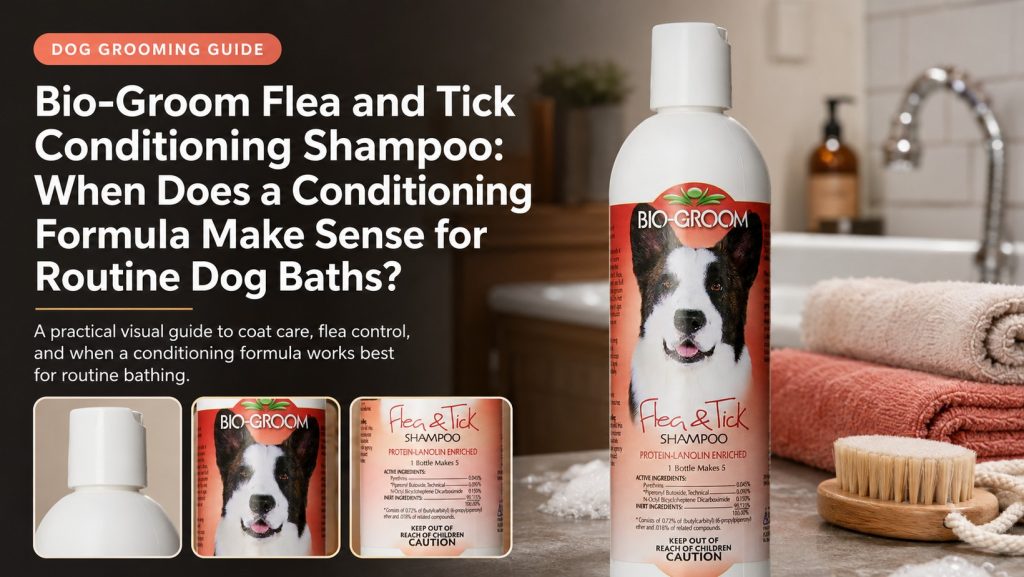
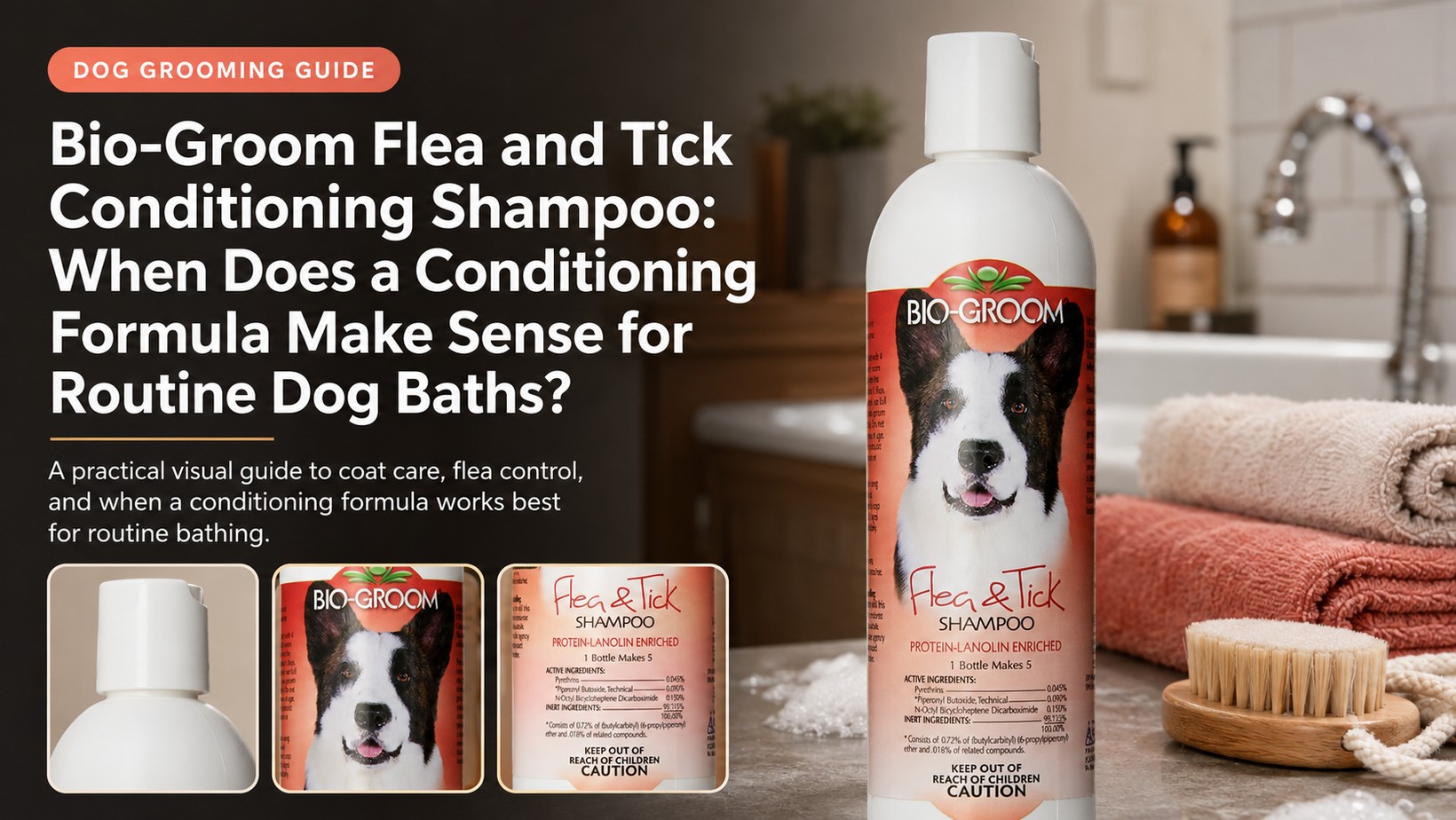
Bio-Groom Flea and Tick Conditioning Shampoo is most relevant when an owner needs a pesticide shampoo bath but also wants to think carefully about coat feel, dryness, and how often the dog is being washed. A conditioning claim can improve grooming convenience, yet it does not change the need to follow the pesticide label exactly.
The practical question is not whether a conditioning shampoo sounds gentler. It is whether the exact formula is appropriate for the dog’s age, health, skin condition, other flea-and-tick products, and current grooming schedule. Dogs with inflamed skin, open sores, a history of reactions, or ongoing medical treatment deserve veterinary input before another pesticide product is added.
For routine grooming, owners should plan the bath from coat inspection through drying. That keeps flea control, contact time, rinsing, and post-bath skin checks in one repeatable process instead of treating shampoo as a stand-alone fix for an environmental infestation.
When Bio-Groom Flea and Tick Conditioning Shampoo Fits a Bathing Routine
A conditioning flea shampoo can make sense for a dog that genuinely needs a labeled flea-and-tick shampoo bath and whose coat tends to feel rough after cleansing. Bio-Groom describes its flea-and-tick dog shampoo as a conditioning concentrate and provides specific dilution, contact-time, age, repeat-use, and precaution instructions on the product label.
That label is the decision point. Flea shampoos act during the bath; they do not remove eggs, larvae, and pupae from every place the dog rests. If fleas keep reappearing, owners should review bedding, carpets, other pets, and longer-duration prevention with a veterinarian instead of increasing bath frequency on their own.
Coat, Flea-Season, and Bath-Frequency Checks
Conditioning Without Guessing at Strength
The site’s product listing for conditioning flea shampoo for dogs is useful for checking the exact item, size, and purchase context before comparing it with the manufacturer label.
Conditioning ingredients can affect feel and manageability, but owners should still judge the skin after the coat is fully dry. Redness, excessive scratching, or a suddenly dull or brittle coat are reasons to pause repeated use.
Dry Coats Need a Broader Grooming Check
When dryness is already a concern, compare the pest-control bath with a separate flea shampoo for dry dog coats option rather than assuming every flea shampoo should double as the dog’s regular cleanser.
Dryness can be influenced by hot water, vigorous towel drying, frequent bathing, environmental humidity, allergies, and underlying skin disease. Changing shampoo alone may not address the cause.
Keep Flea Control Separate from Basic Cleaning
A dog bath flea control routine should define when a pesticide shampoo is actually needed and when a normal grooming shampoo is enough.
Prepare towels, a non-slip surface, a timer, and the label before the dog is wet. That reduces rushed steps and makes it easier to keep lather away from the eyes and mouth.
Plan Around the Real Flea Season
Browsing the broader shampoo for flea season grooming range can help owners compare formats, but the chosen product still has to match the individual dog and local parasite pressure.
Flea season varies by climate and indoor conditions. A veterinarian can help decide whether bathing should be occasional cleanup or one part of a longer prevention program.
Moisture Claims Do Not Replace Skin Observation
A moisturizing flea wash for dogs may sound appealing for frequently groomed dogs, yet comfort after the bath matters more than the front-label wording.
Check the belly, armpits, neck, and areas under harnesses after drying. These places can show irritation that is easy to miss while the coat is wet.
Follow the Product-Specific Repeat Interval
For exact flea shampoo bathing frequency, use the current manufacturer directions rather than a generic grooming calendar.
Bio-Groom’s current product page instructs owners to read the entire label and provides a repeat interval only when needed. Do not combine that interval with other pesticide baths unless the labels and veterinarian support the plan.
Bathing Decision Table for Conditioning Flea Shampoo
Use this table before the bath so grooming goals do not override pesticide-label requirements.
| Question | What to Check | Why It Matters |
|---|---|---|
| Is the dog old enough? | Minimum age on the current label | Young puppies may have different restrictions |
| Is the skin intact? | Cuts, hot spots, raw or infected areas | Irritated skin may need veterinary care |
| Was another flea product used? | Collar, spot-on, oral, spray, or dip | Layering products can change risk |
| How often is the dog bathed? | Routine baths plus pesticide baths | Frequent washing can affect coat comfort |
| Can contact time be timed? | Clock or timer ready before bathing | Label timing should be followed accurately |
Build a Controlled Flea-Shampoo Bath from Start to Finish
Brush or comb the coat first so mats do not hide the skin. Read the label while the dog is dry, confirm dilution instructions, and prepare everything within reach. Use comfortably warm water and keep the dog on a secure non-slip surface.
After rinsing, dry without aggressive rubbing and observe the dog for several hours. Record the product, date, and any reaction so the next flea-control decision is based on a real history rather than memory.
Before the Water Turns On
- Confirm the exact product and dog-only directions
- Check age and health restrictions
- Review other flea-and-tick products in use
- Inspect the coat and skin in good light
- Prepare timer, towels, and rinse water
- Prevent licking during application
- Rinse exactly as the label directs
- Dry the coat thoroughly
- Monitor for sensitivity after the bath
If fleas remain a recurring problem after correctly used baths, shift the question from “Which shampoo next?” to “Where is the flea life cycle continuing?” and review the home and prevention plan.
Pesticide Shampoo Safety Comes Before Coat Feel
Sensitivity can occur with any pesticide product. If a dog develops concerning signs after use, follow the product’s first-aid directions and contact a veterinarian. Keep the original bottle and label available because the active ingredients and registration information matter when advice is needed.
Do not use a dog flea shampoo on another species unless that exact label allows it. Avoid eyes, mouth, and ingestion, and keep children away from the bathing area until cleanup is complete.
The FDA’s safe-use guidance for flea and tick products emphasizes matching the product to species, life stage, weight, health history, and label directions, and recommends involving a veterinarian when choosing pest-control products.
Use Bio-Groom Flea and Tick Conditioning Shampoo as One Labeled Tool
Bio-Groom Flea and Tick Conditioning Shampoo can fit a routine when flea-and-tick shampoo is appropriate and coat condition is part of the grooming concern. The conditioning aspect should support, not replace, careful label use and post-bath skin observation.
For repeated infestations, build a broader plan that addresses the dog, other pets, and the environment. That approach reduces the temptation to solve every flea problem with another bath.
Frequently Asked Questions
Can this replace a regular dog shampoo every week?
Use it only according to the current pesticide label and actual flea-control need. A regular grooming shampoo may be more appropriate between treatments.
Should I use it on a dog with raw itchy skin?
Ask a veterinarian before putting pesticide shampoo on raw, infected-looking, or severely inflamed skin.
Does conditioning mean it cannot dry the coat?
No. Bath frequency, water temperature, coat type, skin disease, and individual response can still affect dryness.
Can I combine it with a flea collar or topical treatment?
Do not assume products can be layered. Check every label and ask a veterinarian when more than one flea-and-tick product is being used.
What should I do if the dog reacts after the bath?
Follow the product first-aid instructions and contact a veterinarian promptly for persistent or serious signs.
