

A comb can look ideal in a product photograph and still struggle to reach the skin beneath a long coat. Dense undercoat, tangles behind the legs and fine hair near the ears can block short teeth. The key question is not simply whether a tool is labeled “for dogs.” It is whether its teeth can enter the particular coat without pulling painfully.
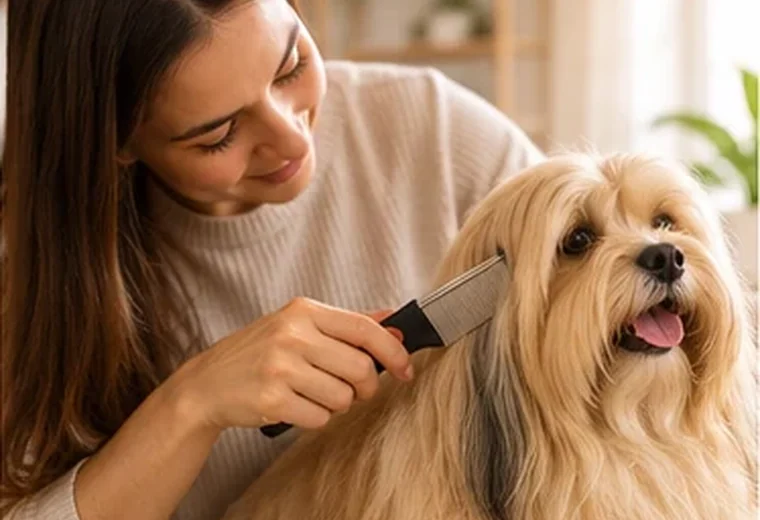
Tooth length and tooth spacing solve different problems
Closely spaced teeth help catch adult fleas and small debris. Longer teeth may improve access through thicker fur. Neither feature excuses forceful handling. If the comb meets a tight knot, stop and work on that mat separately with appropriate grooming guidance. The fine teeth of a flea comb are intended for inspection, not as a substitute for dematting equipment.
A four-feature comparison before checkout
| Feature | What to examine | Long-coat relevance |
|---|---|---|
| Tooth reach | Length relative to parted fur | Short teeth can skim the outer coat |
| Tip finish | Smoothness and absence of snags | Comfort when close to skin |
| Handle control | Non-slip grip and working angle | Easier around ears and tail base |
| Cleaning access | Ability to clear debris | Useful when inspecting many sections |
Length relative to parted fur
Smoothness and absence of snags
Non-slip grip and working angle
Ability to clear debris
A Safari comb described for long-haired coats is worth comparing with standard fine-tooth designs in the catalog, but its name alone does not prove it suits every long-haired breed. Look at tooth shape, physical size and instructions.
Two coats, two different routines
Silky fur with frequent tangles: separate hair into smaller sections and prioritize low-snagging movement. Groom tangles out before attempting a flea inspection. Dense double coat after a walk: work close to the skin where practical, in short controlled passes, without dragging the teeth through heavy undercoat. In either case, stop if the dog becomes uncomfortable.
Keep the inspection short and informative
Work in good light with a damp pale towel and a bowl of soapy water nearby. Inspect the base of the tail and other sheltered areas while avoiding irritated skin. If you see dark debris, inspect it rather than immediately assuming it is flea dirt. The dog may still need a veterinarian-advised flea-control plan even when the comb picks up nothing; fleas have life stages away from the coat.

Test Access Before Judging the Comb
A long-haired dog may have a smooth outer layer but dense fur close to the skin. During a calm grooming session, part a small section with your fingers and try a light pass. If the teeth skate over the surface, that is a fit issue, not a reason to press harder. If the comb catches on tangles, set it down and address those with appropriate grooming methods. Notice how comfortably the handle turns near the tail base and whether the teeth can be cleaned afterward. These observations give you more useful shopping criteria than choosing a comb from a single attractive product image.
The final coat-fit decision
Choose a tool whose teeth reach the right depth, whose grip you can control, and whose instructions make sense for your dog. Where dimensions are missing, ask for them instead of guessing from a photograph. A well-fitting comb makes frequent gentle checks easier; it does not replace ongoing flea prevention.
Compare current product listings and check their full instructions before buying. The products are catalog examples, not independently tested recommendations.
Explore Flea Combs