
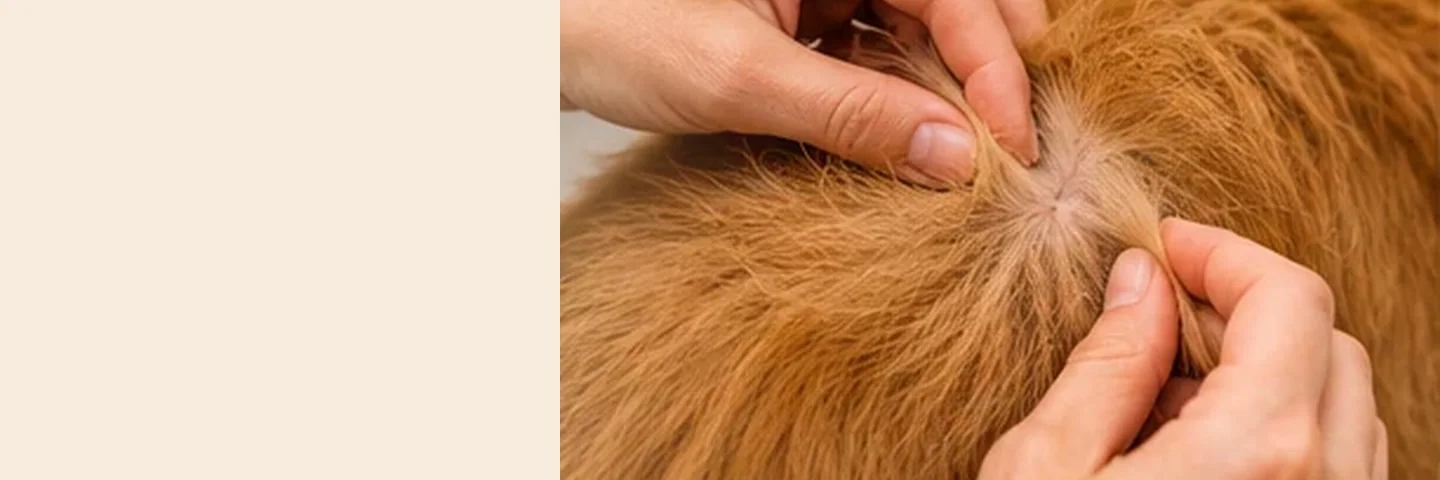
An applicator contains a measured product, but a thick coat can make the intended skin-contact area hard to find. Owners sometimes squeeze the liquid onto the outer fur because the dog will not stay still. Preparation is more useful than speed: read the placement instructions first, choose good light, and have a second person help only if the dog remains comfortable.

What "apply to the skin" actually asks you to do
Many spot-on products specify a location near the shoulders or along several points on the back. The exact placement is product-specific. If skin contact is instructed, gently part the coat with your fingers until a small line of skin is visible. Hold the hair away from the target area while using the applicator as directed. Do not broaden a single application site or create extra sites unless the package specifically instructs it.
Long coat, short session
A long-haired dog may need more time to locate a clear part. Do not cut the fur unnecessarily or scrape the skin with a comb just to make the job faster. A non-slip mat and a calm voice may make positioning easier. If your dog turns repeatedly, pause and reset rather than squeezing the tube while its tip is aimed unpredictably. Stop if the animal becomes distressed and seek veterinary help if administration remains difficult.
Keep the aftercare instructions visible
Some products specify how long the application site should remain untouched or dry. In a household where dogs sleep together, separating them for the instructed period may reduce accidental licking. Children should not handle a freshly treated pet contrary to label warnings. Bathing schedules, swimming and grooming restrictions also come from the specific formulation. Do not assume all drops become water-resistant after the same number of hours.

A Fluffy Neck Needs Preparation, Not Extra Liquid
A long-haired dog has enough hair around the shoulders that the owner cannot see skin at first. After reading the label, the owner gently parts the coat at the indicated site while another adult helps the dog stand calmly. The aim is to place the instructed contents correctly, not to saturate the outer hair until liquid becomes visible. If the application is interrupted and a substantial amount is lost, the family records what happened and asks for product-specific advice. That is preferable to opening a second tube simply because the first application looked untidy.
Review the application before reordering
Make a note of whether the applicator was easy to open, whether the dog tolerated the procedure and whether the package made the technique clear. Those observations can guide a discussion with your veterinarian when choosing a future product. The goal is not simply putting drops somewhere in the coat; it is following the individual product's intended placement without improvising a new dose.
Compare current product listings and check their full instructions before buying. The products are catalog examples, not independently tested recommendations.
Explore Flea Drops